Screening molecules against diseases nobody funds
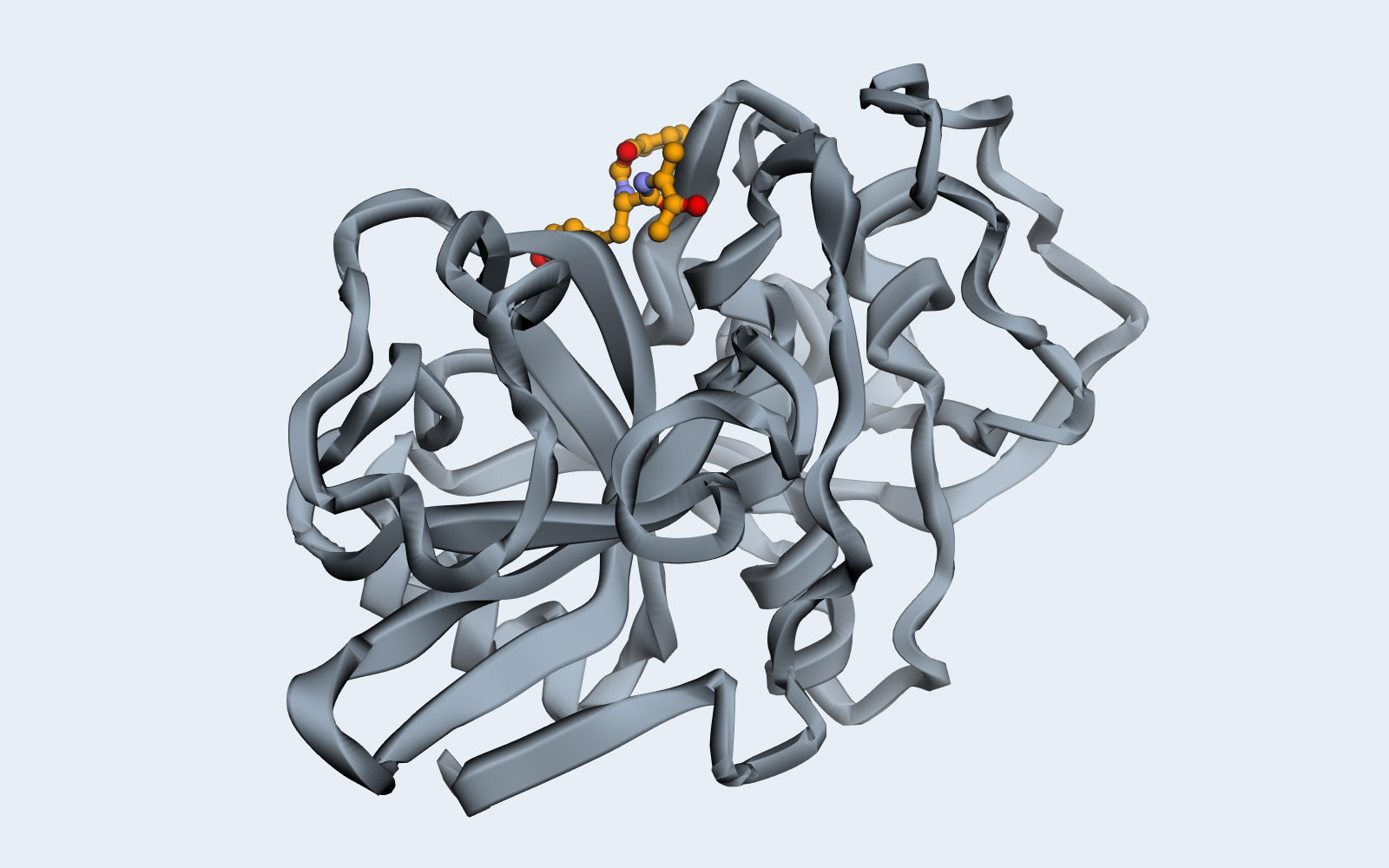
A program picks a protein from a neglected disease, tests whether the method can tell real inhibitors from lookalikes, and only then spends anything screening. Every number here comes from a run you can repeat.
01What the method commits to
02Why this exists
Most diseases of poverty have no one looking for a cure
See the roadmapSome diseases have no research money because the patients are poor. The science is not missing — the funding is. This project rents computing power and uses it to test millions of molecules against a protein that one of those diseases depends on, then publishes everything it finds, free, including the runs that fail.
Two targets were already rejected and published with the number that rejected them. A rejection is a result, and hiding one would make every other number here worthless.
Why the failures are published
In 1909 the first drug aimed at a specific target was found by trying compounds one at a time and numbering each one. The compound that worked was the six hundred and sixth. The five hundred and ninety-nine before it were failures, and every one of them was necessary to get there.
That is the whole argument for publishing a run that went badly. A project that shows only the runs that worked is not measuring anything, it is advertising. Knowing which target a method fails on saves the next group the same weeks, and it is the only thing that makes the runs that succeed worth believing.
The science, without jargon
The lock
Every parasite depends on proteins that do a specific job. Block the right one and the parasite stops. That protein is the lock.
The keys
Public catalogues list billions of real, purchasable molecules. Any of them could be the key. Nobody knows which.
The trying
A computer can turn each key in the lock and score how well it fits. That is called docking, and it eats graphics-card time — which is exactly what money buys.
Testing keys in a laboratory costs real money per molecule. Testing them in a computer costs a fraction of a cent. That difference is the entire reason this project can exist at all.
What actually happens, step by step
-
Pick a structure and prove it is usable
Crystal structures of the target are downloaded from the public protein bank. Any structure whose ligand is chemically bonded to the protein is rejected — docking cannot reproduce that, and using one silently poisons every result that follows.
-
Run a positive control
Before trusting anything, the same pipeline runs on famous, easy cases where the right answer is already known. If it cannot reproduce those, nothing else it says counts.
-
Measure whether the method works on this target
Inhibitors that were measured in real laboratories are mixed with look-alike molecules that are presumed inactive. The method should push the real ones to the top. The pass mark is fixed before the run, never after seeing the number.
-
Screen at scale
Only once the checks pass does the project rent GPUs and start working through the catalogue, batch by batch, publishing the score of every molecule it touches.
-
Buy the best ones and put them on a bench
Top candidates are ordered from a chemical supplier and sent to a real laboratory, with the assay paid for. That is where a computer result becomes an experiment.
Where the money goes
Every fee becomes computing time.
No GPU runs when nothing is being paid for, so an idle project costs nothing and simply stops — visibly, on this page. Receipts for what was spent are published here.
One disease is not the point
This is a process, not a single campaign. A target gets validated, screened, published, and then the project moves to the next disease on the list — carrying the same pipeline and the same rules.
The first target, cruzain, was rejected here before a single dollar of GPU was spent: the method could not tell a true crystal pose from a wrong one in its shallow site. That result is published and stays published. The second is CYP51, chosen by measuring candidates rather than by picking the one that sounded best.
Every campaign leaves behind a dataset that outlives it, and the list of what to attack next is kept openly — below, on the roadmap. A neglected disease is neglected precisely because no one keeps a standing list and works through it.
Who picks it up from here
Everything produced goes into the public domain immediately — scores, poses, the compounds tested, and the runs that failed. Open consortia and academic groups already work on neglected diseases and can use the data; the model of shipping free compounds to labs that want to test them has worked before. The project claims no partnership it does not have, and announces none before it exists.
Steps beyond the bench — medicinal chemistry, animal studies, clinical trials — are not ours and are not funded here. They are marked as such on the roadmap.
The agent at work
Work done so far
The target on the bench
Status of this target
Why this disease
Why this protein
Who paid for this connecting…
Every purchase funds a batch of molecules, screened in the name of the address that paid for it. The batch is public the moment it runs — here, on the live view above, and in the downloadable data.
The queue of targets
This is a process, not a promise. Each protein has to clear the same gate before a single funded molecule is spent on it. Rejections stay on this list, with the number that rejected them.
Is the method sound? — three checks, all published
1 · Positive control
The same pipeline on textbook redocking cases. Separates "the code is wrong" from "this target is hard".
2 · Enrichment
Measured inhibitors vs property-matched decoys. The test that matters for screening: ranking, not pose.
3 · Pose reproduction
Can a known ligand be put back where the crystal shows it is? Threshold 2.0 Å.
Every crystal ligand tested, pass and fail
Screening output — molecules, ranked
Every molecule from the run above, best score first. Known inhibitors are marked. Decoys sitting near the top are the method failing, and they are shown exactly as they came out.
00Published results
Nothing published under this launch yet
No target has cleared the gate for this project, so there is nothing to publish here and this page will not pretend otherwise. The moment a screening run produces a score, every score lands here with the file that produced it, including the runs that fail.
The work done before this launch is archived rather than deleted: one target rejected on published numbers, and a further seven put through the gate with the reasons recorded. It is kept because knowing which target a method fails on is a result. It is not presented as this project’s record.
The record
Everything the agent has published, newest first. Each entry carries the timestamp of the file that produced it and a link to that file, so any claim here can be traced back to the run that made it — including the ones that went badly.
Published data
Public domain, no attribution required, no account needed. Failed runs are included on purpose: knowing which method does not work on a target saves the next person the same weeks.
Posts
Previous campaigns
Targets this project has worked on before. Kept on purpose: knowing which target a method fails on is a result, and it saves the next group the same weeks.
Roadmap — each step priced, each step a receipt
Costs are what the project will spend. A step unlocks when its cost is covered, and when it is paid the receipt is published here with the date. Every figure says where it came from: measured is what was actually spent, estimated is derived from a public rental price, and unquoted means no supplier or laboratory has given us a price yet — an order of magnitude, not a quote, and no compute marks a step that spends nothing on hardware at all. Estimates are replaced by measurements as soon as the first real invoice exists.
The queue — diseases measured and waiting
Candidate targets across neglected diseases, each measured for what actually decides whether work is possible: how many published structures exist, and how many inhibitors have been measured in a laboratory. A target with no measured inhibitors cannot be validated, so it cannot be worked on honestly — that is a fact about the data, not an opinion about the disease.
The full ladder, and who pays which rung
Virtual screening
Days. Hundreds of dollars of GPU. Millions of molecules.
Buy the compounds
About three weeks. Made to order by a chemical supplier.
Enzyme assay
Weeks. Does the molecule actually block the protein?
Cell assay
Months. Does it kill the parasite without killing human cells?
Medicinal chemistry
One to three years. Hundreds of variants to make it potent and safe.
Animal studies and toxicology
Two to three years. Millions of dollars.
Human trials
Five to eight years. Tens to hundreds of millions.
Rungs five to seven are shown so the distance is honest, not to suggest this project will climb them. It will not. It does one to four and hands the data to whoever does the rest.